Health inequalities are not new, nor are they mysterious.
We know that where people live, the work they do and the trauma and stresses they have experienced, all affect their chances of living a well and long life. And yet, despite decades of policy commitments, the gap in healthy life expectancy between the most and least deprived communities continues to widen.
It’s not a lack of data that’s the problem – there are extensive statistics available on service access and health outcomes. But this type of evidence does not always capture how inequalities are experienced locally, how people use (or why they don’t use) services, or how very specific issues play out for smaller or less visible communities.
Developing this kind of understanding requires a level of proximity and trust that professionals – however well-intentioned – will often struggle to reach.
The Community Participatory Action Research (CPAR) programme was developed to address this challenge.
“Yesterday we were the ones advocating, today we are the ones bringing change.” – Noorullah Sidiqi, Community Researcher (Health Inequalities Among Afghan Women in Hampshire)
Now in its third year, CPAR trains people working in community organisations across the South East of England to conduct participatory research on issues pertinent to their work and communities.
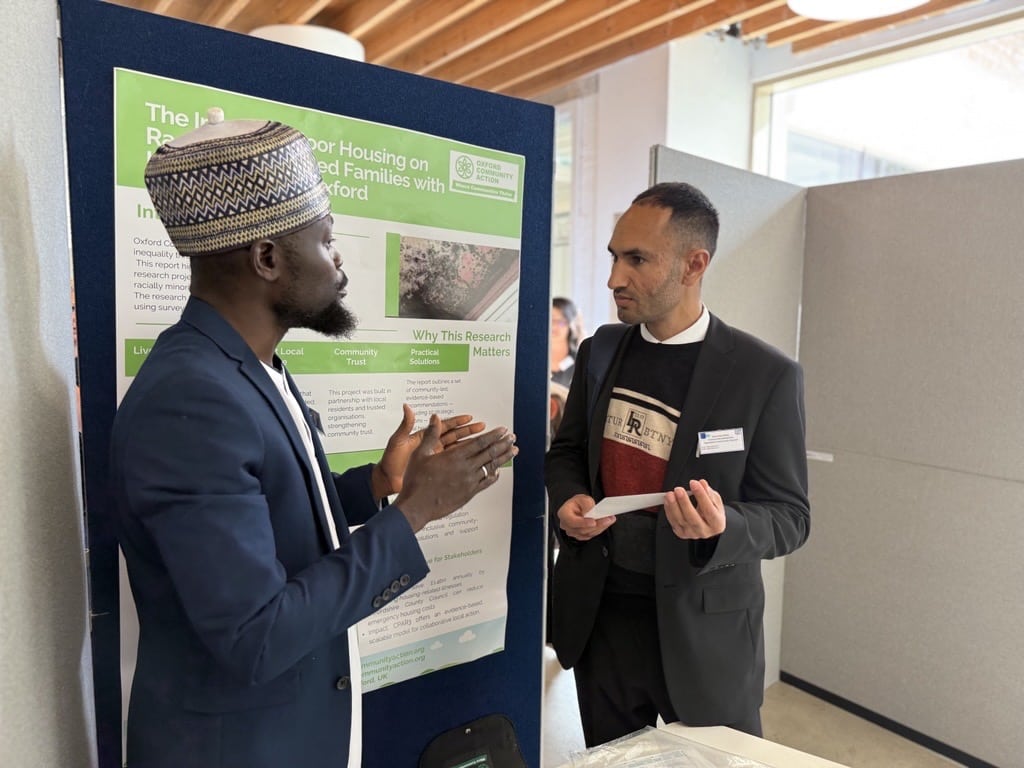
This year’s researchers have chosen to address a spectrum of topics: why older Afro-Caribbean residents experience high blood pressure; how damp housing affects families’ health; how migrant women navigate menopause care; how digital systems affect older adults; and how displacement and conflict shape wellbeing. Read some highlights here.
“Speaking directly with women during the research was one of the most powerful and transformative aspects of this work.” – Jacqueline Mukono, Community Researcher (Utulivu – Mental health and hormonal health project)
As well as generating new evidence, the programme builds capacity within the VCSE sector. Community researchers develop skills in research design, data collection, analysis and stakeholder engagement. This contributes to a longer-term legacy: organisations better equipped to participate in system conversations, articulate community priorities and sustain participatory approaches beyond the life of a single project.
Key Findings
– ‘Digital by default’ and language barriers are creating significant roadblocks for the most vulnerable in our communities.
– A lack of cultural sensitivity has eroded trust in statutory services.
– Physical and mental health cannot be treated in silos – marginalised groups experience complex, multiple conditions where social stressors manifest physically.
– When basic needs – housing, food, and safety – are unmet, people struggle to prioritise preventative health or chronic condition management.
– Trauma, relocation, and interpersonal conflict is affecting mental and physical health.
“Listening to ‘hidden stories’ and turning them into meaningful evidence strengthened my belief in the power of community-led research.” – Abesh Rai, Community Researcher (Folkestone Nepalese Community – Barriers to health service access project)
Key Recommendations
– Primary care and providers: Keep non-digital access open, adopt whole-person, trauma-informed practice, and make warm, relational referrals to community support.
– Commissioners and funders: Fund access as well as activity; invest upstream in prevention, co-design, and cross-sector collaboration; and create outcomes that reward partnership working.
– VCSE organisations: Continue to offer trusted spaces, advocacy, and cultural translation – partnering confidently while protecting capacity and mission.
Case Study Highlights
Portsmouth Mediation Service (PMS) works with a restorative approach to help people move from dispute to dialogue, and work in partnership with local entities to address the broader social impacts of conflict.
Laura Rook and Nadiya Al-Samerai’s research gathered ‘real life stories’ that focused on three questions: the impact of conflict on wellbeing, the structural barriers to resolving disputes, and the role of partners in preventing conflict from escalating into health crises.
Key Findings
- Conflict profoundly damages emotional wellbeing.
- Chronic stress manifests physically and keeps the body in ‘fight or flight’
- Conflict significantly disrupts daily functioning and social connection
- Communities show strong appetite for skills and agency, not just intervention: Residents were open about trauma and actively requested training on how to raise issues constructively.
What’s changed?
By producing recorded personal stories in a short film format, the research team created a powerful resource to communicate lived experiences directly to GP surgeries, the NHS, local councils, and wider health and care stakeholders. Intended to support presentations and discussions with those ‘who have the power and passion to influence change,’ the film serves as a visceral and deeply human means to capture and project older adults’ voices, ensuring that their perspectives and experiences are heard within conversations about service design and accessibility.
Overall, the project reinforced the value of community-led, creative approaches in capturing nuanced experiences and translating them into compelling, accessible evidence for change.
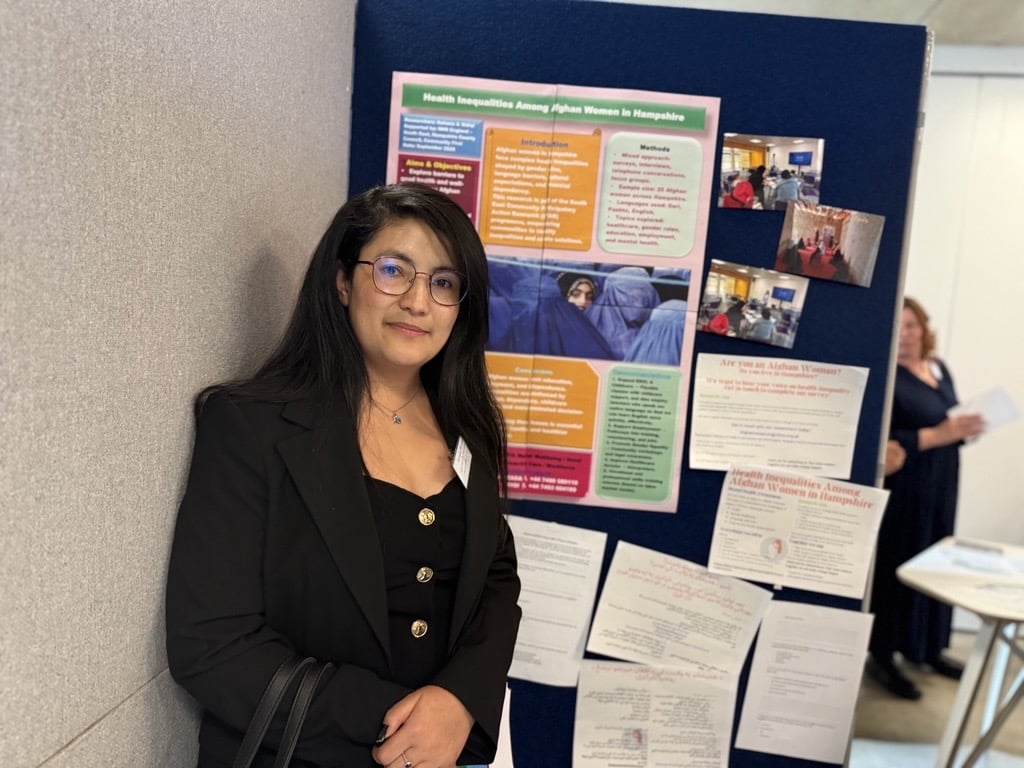
Rehana and Sidiqi are volunteers at Community First Hampshire, an independent membership organisation supporting the voluntary and community sector in Hampshire to make a difference in their communities.
They worked with 21 Afghan women from varied backgrounds and lengths of residence (many arriving under Afghan Relocations and Assistance Policy) to examine language barriers, gender roles, isolation, and access to care. As insiders, the researchers note that shared lived experience reduced power imbalances and enabled unusually open, honest conversations, which they describe as validating and transformative.
Rehana and Sidiqi reflected that the research felt not just like a professional task, but a moral responsibility to their community and emphasised the resilience and ambition of the women who took part.
Key findings
- Language barriers were the most significant limitations to accessing healthcare.
- Employment and financial dependency limited women’s independence and confidence, with limited English skills, childcare responsibilities and a lack of suitable employment opportunities acting as constraints.
- Traditional gender roles and misinterpretations of religion were found to reinforce male dominance within households, restricting women’s autonomy and decision-making.
- Feelings of stress, depression, and loneliness were commonly reported alongside limited opportunities to engage outside the home.
- Afghan women demonstrated resilience and ambition expressing aspirations for education, employment, and community involvement.
What’s changed
Although completed in October 2025, the project is already informing local practice by offering a credible insider perspective for policymakers and providers, with a strengthened partnership with Hampshire County Council.
For Rehana and Sidiqi, the project opened new opportunities to get involved with International Rescue Committee (IRC) UK, first as volunteers and subsequently as staff members within the Resettlement, Asylum, and Integration programme. This role supports Afghan communities across Hampshire and enables continued, direct engagement with the populations central to the research. Sidiqi noted that:
Yesterday we were the ones advocating, today we are the ones bringing change.”
CPAR has equipped them with skills in stakeholder engagement and raised their professional profile. CPAR was just the beginning of a longer journey – one that has already begun to translate community-led research into meaningful and wider change.
Work Better Innovations (WBI) is a CIC dedicated to delivering community-based solutions to global challenges affecting vulnerable populations. Founded by minority women with lived experience of migration in Portsmouth, WBI strives to drive transformative change from the community level with a focus on tackling health and employment inequalities.
The research centred on the lived experience of women from a wide range of migrant backgrounds, focusing on those voices often underrepresented in health research. The researchers wanted to understand how migrant women experience menopause within the UK healthcare system, and why many remain unsupported despite significant physical and emotional symptoms.
Key findings
The research revealed that barriers to menopause care for migrant women are shaped by the interaction of cultural norms, language barriers, and healthcare systems that are not designed with diverse experiences in mind. Together, these factors contribute to delayed care, unmanaged symptoms, and feelings of invisibility.
What’s changed?
The findings have already contributed to dialogue and advocacy surrounding migrant health and wellbeing at both local and international levels.
Locally, WBI shared the findings through its Food with Friends forum, bringing together research participants, stakeholders, and community members in Portsmouth and creating space for shared reflection, validation of lived experience, and discussion about how services can respond more effectively. Anita reflected that:
…one of the most fulfilling aspects of the project was seeing participants transform – from initial hesitation to confidently sharing their stories.”
As a migrant woman herself facing many of the challenges expressed in the research, she felt that her lived experience allowed her to represent the voices of women often overlooked in mainstream research. For Fatma, in addition to developing new research skills, hearing other women’s stories prompted her to seek specialist care and begin HRT, significantly improving her quality of life.
Both researchers reflected on the ‘power of community research to drive real change’ highlighting how lived experience, building trust, and sharing stories are not only powerful research methods, but essential tools for enabling lasting, meaningful positive outcomes.
Citizen’s Advice West Sussex (CAWS) is an independent local charity and member of the national Citizen’s Advice Network. While its primary function is to provide accessible information to help individuals resolve problems, CAWS also uses community voice and insight to influence systems change in and around West Sussex.
Crawley is home to the UK’s largest Chagossian population, a community with roots in the Chagos Archipelago, with over 3,500 individuals settling in the town since the introduction of a new UK citizenship route in 2022. The community faces significant health inequalities, with 56% of participants disclosing a health condition or disability.
Researchers sought to understand if changes to migration and demographics creates new accessibility or service needs. During the research process, Amy, Catalina, and Tessa reflected on how essential it was to build relationships with the community in culturally sensitive ways.
Key findings
Researchers asked community members how they manage their health, navigate daily responsibilities, and interact with local services, and found a close link between deprivation and health inequalities. Their findings reveal:
- Immediate survival needs routinely take precedence over healthcare.
- System-level barriers prevent effective access to care for most participants.
- Limited knowledge and confidence restrict people’s ability to navigate healthcare systems.
- Widespread housing insecurity directly undermines health outcomes
- Immigration and welfare bureaucracy creates persistent barriers and psychological strain.
While the community is resilient, many are ‘slipping through the cracks,’ due to systems that assume a level of stability, literacy, or accessibility. Despite the systemic failures and lack of trust, research participants were keen to contribute to positive change, offering thoughtful recommendations, largely focused on building capability and confidence.
What’s changed?
Staff training in the CPAR approach has enabled lasting impact for the organisation by ‘laying the foundation for a sustainable legacy of inclusion, learning, and system change.’ The deep community engagement undertaken in this research has provided an invaluable platform for individuals facing these challenges to share their experiences and help shape future solutions.
- Since completing the fieldwork CAWS has seen an uptake in Chagossian participants in their beginner’s English language classes, where participants can learn language skills and build their capacity to navigate UK systems independently.
- Since CPAR, over half of the participants in these classes are now Chagossian, effectively acting as an ‘upstream preventative measure’ for improving access to healthcare.
The researchers described CPAR as a ‘validating’ experience. It provided a platform to build confidence, particularly in public speaking and presenting findings to large groups. For Amy, the process revealed a strong interest in research, sparking a desire to pursue further research opportunities.
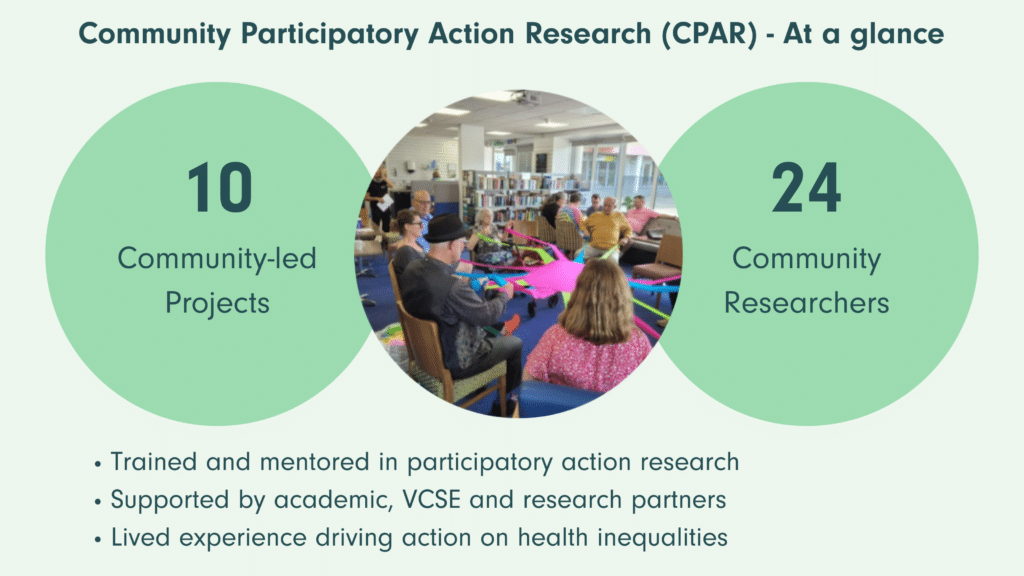
These are just four stories from 10 case studies of community-led projects, with 24 community researchers leading participatory action research projects.
