What does it take to merge two charities with deep roots in their community? Between them, Kisharon and Langdon spanned the full life cycle of support for local Jewish families.
CEO Richard Franklin shares how they undertook the big step of uniting, and what they’ve learned in the process.
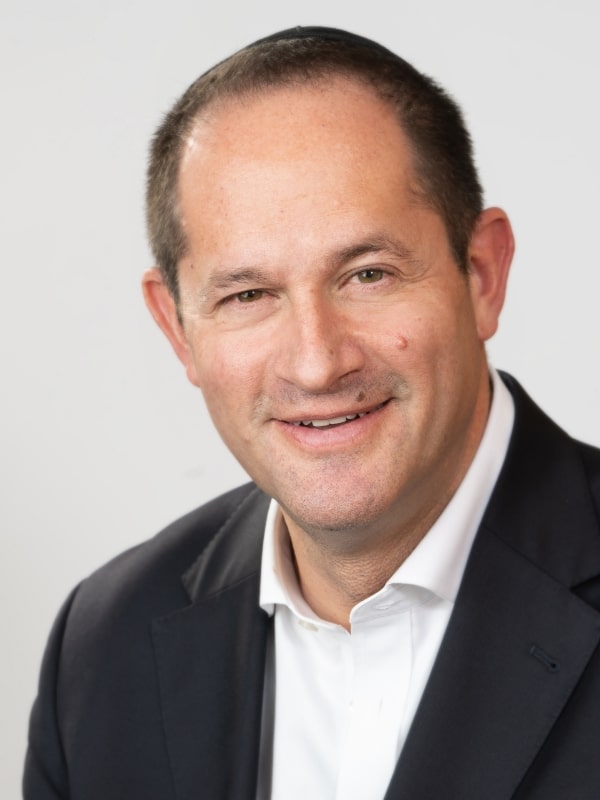
In August 2023, Kisharon and Langdon became one organisation – uniting two Jewish charities that supported people with learning disabilities and autism across north-west London. Between them, they worked across the whole educational life cycle: Kisharon ran a nursery and school, and Langdon had a college. The combined charity, Kisharon Langdon, has an annual budget of £24 million and supports people with learning disabilities and autistic people at every stage of life.
What were the key drivers behind the merger?
Over the years, many charities have sprung up across the Jewish community, some doing very similar things. Conversations about merging often happen in silos, because of these similarities and because everyone is approaching the same donor pool. That was very much a factor in thinking about long-term sustainability and viability – if we’re all talking to the same people, we should probably be talking to them together.
if we’re all talking to the same people, we should probably be talking to them together. “
The decision to merge was not taken lightly, but for the people supported by both charities, it made complete sense. People would often move from nursery to school and then to college, but sometimes that meant jumping between organisations rather than a smooth transition.
For adults, both organisations had a strong track record in supported living and employment, inc

What was the timeline from beginning to end? What steps did you follow and who was involved?
Initial discussions began in 2019, led by the CEOs and chairs of both organisations. In fact, the existing relationship between the two CEOs was a key factor in opening up these conversations and establishing a foundation of trust. Both organisations approached the discussions with a clear understanding of the potential risks, while remaining open and vocal about their concerns, priorities and aspirations throughout the process.
Between 2020 and 2021, working groups were set up to tackle different aspects of the merger. By autumn 2022, good progress had been made, with:
- A merger feasibility study completed
- Merger Delivery Board established to progress the discussions
- Stakeholder consultations held
- Legal and financial due diligence conducted
- A project manager appointed to lead the merger implementation programme
- A target date of August 2023 set for completing the merger
As a result, the merger was given the green light, with a clear focus on beneficiary benefit.
What did this focus on beneficiary benefit look like in practice?
Part of it was making sure we could both expand and consolidate the services we offered. We often say “we support people at every stage of life”. Now that we’ve merged, the transitions are much smoother than before. People can move from nursery to school to college, with after-school clubs, activities and summer camps along the way, and then into supported living – with employment support to help them find a job and gain skills, alongside adult community activities and a wide range of community programmes. Rather than two separate organisations working with the same groups of people, we can now offer a broad, seamless journey through someone’s life.
What were the easiest things to align?
Some of the easiest areas to align were our relationships with stakeholders and funders. It was not difficult to explain the rationale for the merger to either group, as the data showed relatively little overlap between the two organisations’ donor bases. In many ways, we were bringing together two groups of people who already supported similar causes and shared a commitment to improving the lives of people with learning disabilities and autistic people.
Operationally, having clear donor data from both organisations made it relatively straightforward to align fundraising activity. The fundraising teams worked well together, with a shared understanding of the cause and the purpose of the merger. Marketing and communications were similarly straightforward to align, as the rationale was clear and immediate and did not need the same level of consideration as frontline services.
By being clear and open about our shared values and purpose, we have been able to navigate these differences positively and bring people together around a common vision.”
Before the merger, there had been some anxiety about whether the two organisations could bring their different ethos and cultures together, particularly in relation to religious identity and practice. In practice, this has proved much easier than anticipated. By being clear and open about our shared values and purpose, we have been able to navigate these differences positively and bring people together around a common vision
What were the most difficult? How did you overcome them?
Merging two well-established charities was never going to be completely straightforward – each came with its own organisational culture, operational systems, branding, identity, governance structures and services, to name a few.
One of the biggest challenges has been aligning and improving the systems and processes used across both organisations. This has not been a simple choice between keeping one organisation’s systems or adopting the other’s. Instead, we have focused on bringing together the best of both while finding opportunities to improve and modernise them. This has been particularly important for digital systems and infrastructure.
One of the biggest challenges has been aligning and improving the systems and processes used across both organisations.”
The complexity has been heightened by the number of people we support and the diversity of their needs. Our services must keep operating effectively and providing high-quality support while improvements are introduced. This has meant teams often managing several priorities at once – delivering their day-to-day roles while also contributing to significant organisational change.
The external environment has added to these challenges. Reductions in public funding, alongside increases in the National Minimum Wage and National Insurance contributions, have put additional financial and operational pressure on the organisation.
We have worked through these challenges by taking a phased and collaborative approach, recognising that successful integration is about continuous improvement rather than simply aligning existing practices. Teams have been encouraged to share expertise, identify what works well across both organisations and help develop better ways of working. This has allowed us to make progress while keeping a clear focus on the quality and continuity of services for the people we support.

How did you bring your team and trustees with you?
Clear, consistent and regular communication throughout the merger process was vital. Staff received updates at key stages, and we used established channels of communication to make sure information was shared openly and consistently across the organisation.
We also kept an open-door approach, encouraging people to ask questions, raise concerns and seek further information whenever they needed to. This helped to build trust, reduce uncertainty and make sure staff and trustees felt able to engage with the process rather than simply receive updates about it.
What does the merged organisation look like today? How do you measure its success?
Thanks to the support of our community, the merger has enabled remarkable growth across all our services. Day services have expanded from 26 sessions a month before the merger to more than 140, providing far more opportunities for engagement, learning and social connection.
Friday Night Dinners now welcome more than 70 people – triple the number before the merger – fostering friendship and belonging.
Our supported living service now supports 166 people across Golders Green, Hendon, Edgware, Borehamwood and Manchester, up from 147 before the merger, with more people on the waiting list.
Friday Night Dinners now welcome more than 70 people – triple the number before the merger – fostering friendship and belonging.”
Driving efficiencies was also a key reason for the merger, and savings in back-office costs are now more than double the projected £500,000. We have also raised £1 million per year more than before the merger. Together, these achievements show how the merger has strengthened our ability to empower more people, deliver greater value and build a more vibrant, inclusive future for our community.
What would be your key advice to those considering the same journey?
Our key advice would be to recognise that a merger is a marathon, not a sprint. You need to be prepared to think at both a macro and a micro level, often at the same time. While it is essential to keep sight of the wider strategic vision and long-term goals, the detail of day-to-day integration also needs significant attention.
You need to be prepared to think at both a macro and a micro level, often at the same time.”
It is equally important to think beyond the point at which the merger formally takes place. The day you merge is not the end of the journey but the beginning of a new one. In many ways, it marks the creation of a new organisation, with its own culture, systems, relationships and opportunities.
Organisations embarking on a similar journey should plan not just for the merger itself, but for the ongoing work of building and developing the organisation that emerges from it. It takes patience, flexibility and a willingness to keep learning and improving along the way.