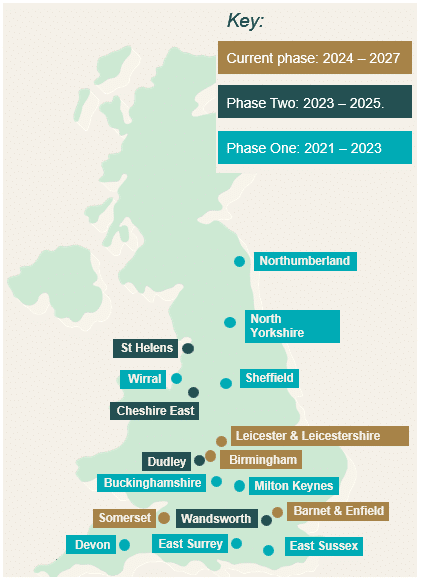
What would it mean if loneliness and social isolation in St Helens were addressed openly and collectively, rather than left unseen? How might Wandsworth respond when South Asian women are not accessing vital cervical screening? How can support for childhood obesity in Dudley move beyond clinics to become part of everyday life? And what does it take for a GP practice to feel welcoming to the East Timorese community in Crewe?
These are the questions that the four areas involved in the latest phase of Connecting Health Communities (CHC) – a programme which helps communities, charities and the public sector tackle a local health inequalities, together.
We give an insight into all four of them below:
1. St Helens: Conversations against loneliness


Loneliness is often described as a national epidemic, but in St Helens the issue is particularly acute — with 11% of residents often or always feeling lonely, compared with 7% nationally. Rates of self-harm admissions among 10- to 24-year-olds are nearly double the national average.
Rather than rushing to solutions, local partners began by exploring the human experiences, and the cultural and structural reasons behind these stark statistics.
By holding conversations in libraries, GP surgeries and community spaces, IVAR helped local organisations share what they needed from the system — ensuring their everyday experience informed local change.
An important finding was that language and stigma were often as isolating as the circumstances themselves. Assumptions about who is ‘deserving’, forms that labelled people before asking who they were, wording in well-meaning conversations.
With support from IVAR and the St Helens Together Against Stigma Charter, partners began reviewing the language they used about residents, aiming for descriptions that focused on respect and strengths, rather than deficit.
“We don’t talk about people as ‘hard to reach’ anymore – we ask whether we’re easy to approach.”
What’s changed
- Cross-sector commitment to the Anti-Stigma Charter
- Workforce training in inclusive language and practice
- A “Proud St Helens” communications approach celebrating local strengths
- Services building connection through everyday encounters
Early signs point to a shift in tone and trust — conversations feel more human, and services are beginning to pay closer attention to how language shapes belonging.
2. Wandsworth: Addressing cervical screening fears
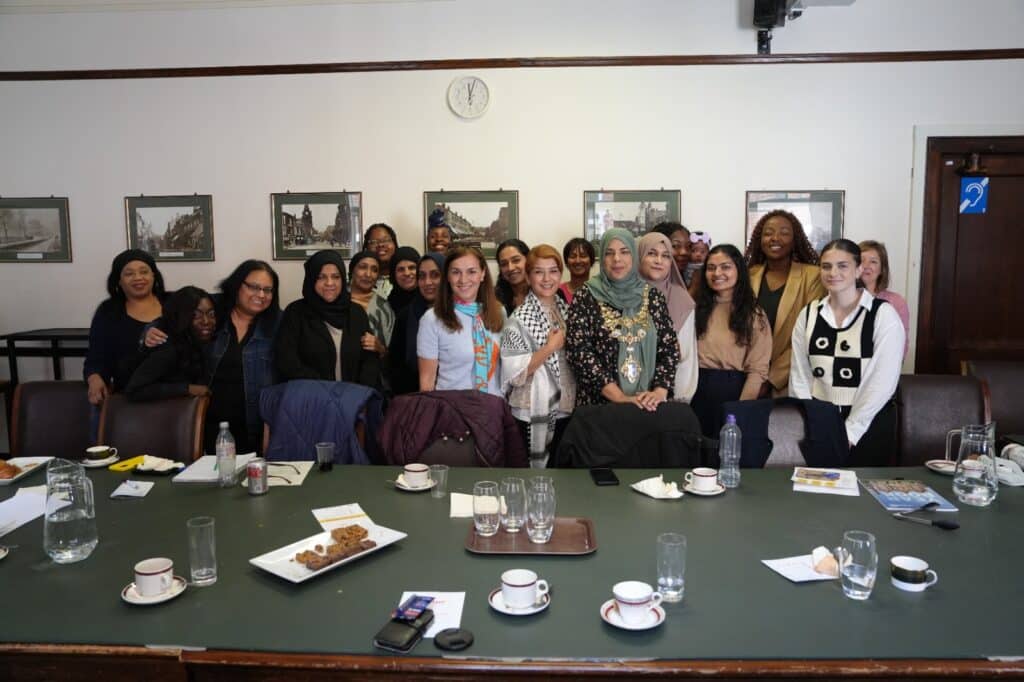

Cervical screening take-up is lower than average in the South London borough of Wandsworth. Rates fall further among people living in more deprived areas, and amongst the borough’s significant South Asian population. Cross-sector practitioners worked with trusted local partners to understand why — meeting people in places they already knew and used.
Working with community leaders and GPs, IVAR organised small, multilingual sessions in trusted spaces such as temples, women’s groups and community centres. In those settings, women were able to share their questions and concerns more openly, highlighting common barriers to screening — from embarrassment and family expectations to uncertainty about what the test involved, and how much it might cost.
It has shown how important it is to engage with communities rather than assume what’s needed.
These conversations cemented the fact that information alone doesn’t change behaviour; relationships do. Partners responded by creating short videos and translated FAQs, and by training GP reception staff to handle sensitive questions more confidently.
What’s changed
- Multilingual materials co-designed with local women
- New partnerships between GP practices and community groups
- Increased confidence among staff to discuss screening
- Plans for further workshops to reach other language communities
The impact will take time to show in numbers, but stronger trust and clearer communication are already visible signs of progress.
3. Dudley: Beyond the label of child obesity


At first, the focus of the CHC programme in the Dudley ward of Brockmoor and Pensnett seemed straightforward. With 17% of reception-age children and 29% of Year 6 children classed as obese, directly tackling childhood diet and exercise felt like the clear priority for professional teams.
But while health, voluntary and local government partners shared this concern, conversations with residents revealed something else. People were tired of being told what their community’s problems were. They rarely spoke about obesity. Instead, they emphasised pride, safety and opportunities for children — factors that improved their daily lives.
In response, the partnership reframed its work: moving from ‘reducing obesity’ to ‘helping families live healthier, happier lives’. They worked with IVAR to organise a series of community events and activities. One hundred and fifty people attended a showcase day, giving them access to over 40 local groups and services – from Citizens Advice to Girl Guides – alongside sports games, dance sessions and free health checks.
It was wonderful to see so many people come together to celebrate what makes our community special.”
What’s changed
- A shared, more positive language around health and wellbeing
- Stronger relationships between council, health and community partners
- Local events and school activities celebrating community pride
- Families’ ideas shaping future priorities for open spaces and activities
The steering group now meets regularly, supported by a local researcher and Community Champions, to keep the conversation going and turn ideas into practical next steps.
4. Cheshire East: Trust and TB in the Timorese community
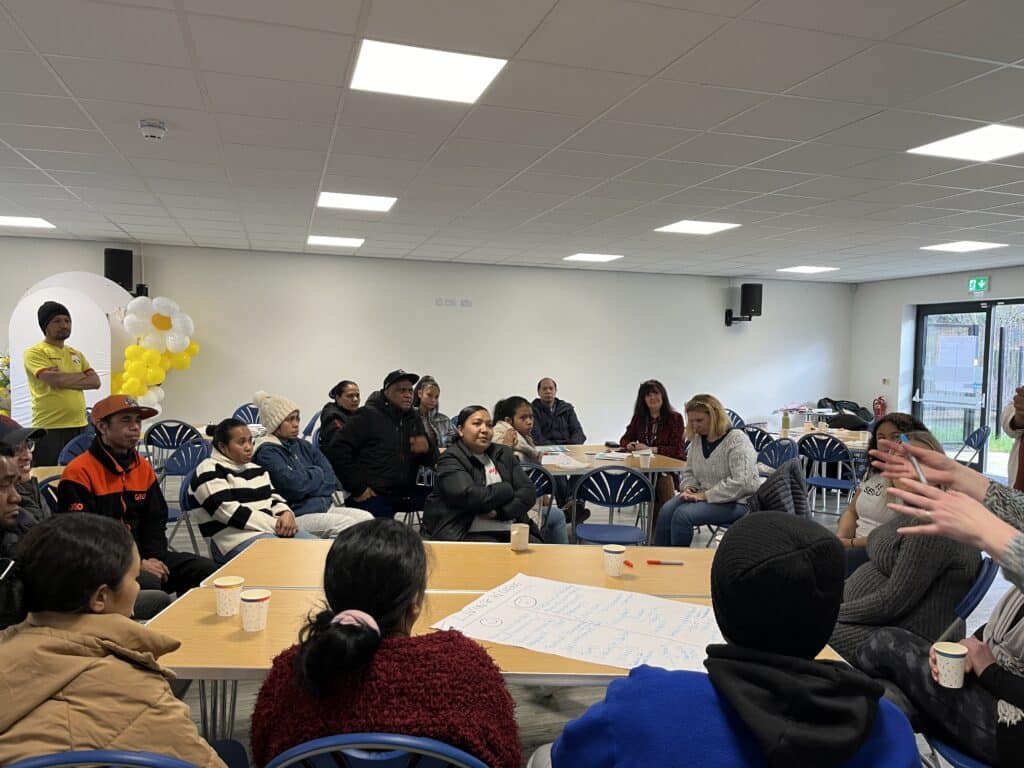
According to local estimates, around 2,000 people from the tiny South-East Asian country of Timor-Leste (East Timor) now call Crewe home. But this is only an estimate — because many East Timorese citizens hold Portuguese passports, their numbers are difficult to track. That invisibility has a knock-on effect on services, making it harder for health teams to understand and respond to the community’s needs.
Cheshire East council came into the CHC partnership with two burning issues: higher rates of tuberculosis (TB) and low GP registrations in this community. Partners recognised that traditional outreach was not working, and progress would depend on building trust and relationships.
IVAR facilitated conversations with the community to help build understanding of the barriers to screening. Conversations were often informal, helped by interpreters fluent in Tetum and Portuguese, and focused on simple, practical questions: what makes it hard to see a GP? what would help? They began to understand more about cultural stigma around to TB: seen as “a disease of poverty”, because of its links with low income and overcrowding, and frequent co-existence with HIV or syphilis.
The team responded by translating posters and leaflets, and by taking health staff out to community events and running ‘micro-events’ at convenient times for people working long or irregular hours. They leaned on trusted institutions – the council, local churches and community groups – to act as hosts and conduits.
We just tend to focus on symptoms, but
starting with wider inequalities has been a good place
to start.
Engagement was inconsisent, often depending on relationships with individual partnership members. But over time, more people began approaching the team directly – asking about registration, screening and how to access care safely.
What’s changed:
- Greater awareness of TB and the importance of GP registration
- New relationships between health teams and community leaders
- Translated resources and events held in familiar venues
- A refreshed Health Needs Assessment reflecting the community’s voice
These are just four stories from 18 years of IVAR’s work facilitating cross-sector partnerships to develop practical responses to local health issues. Through Connecting Heath Communities, we have joined up services, charities and communities to work together to tackle health inequalities.
Read more about the work, and find out about our latest focus areas here.