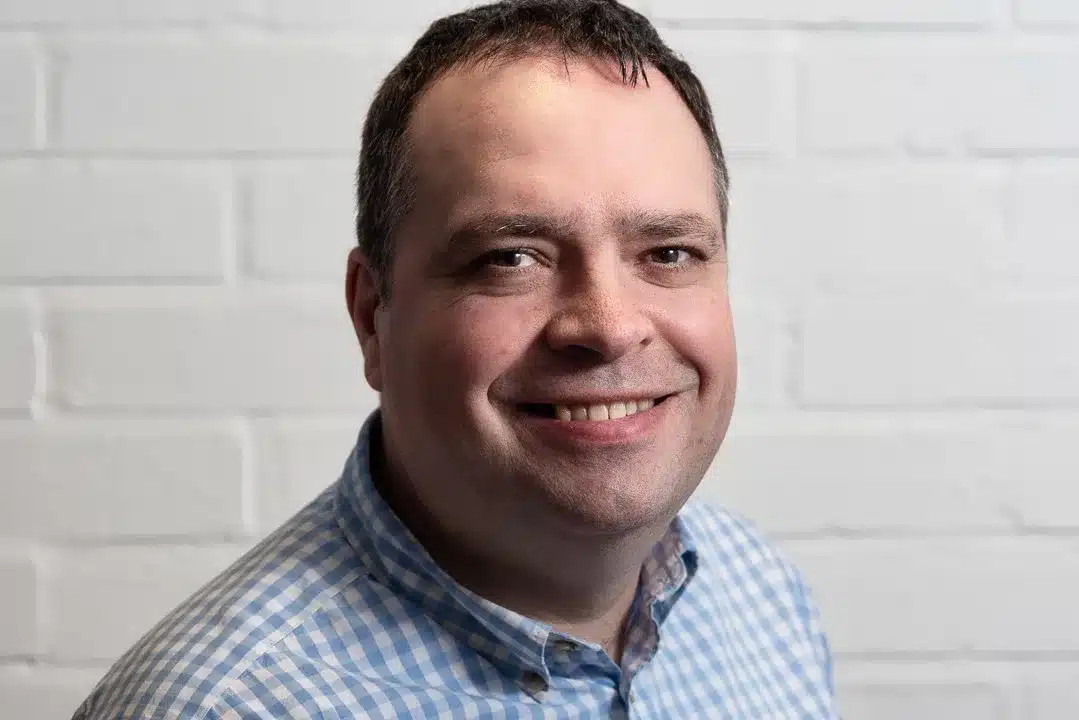
Mark Freeman is chief executive of Support Cambridgeshire, which was formed when two county infrastructure organisations, CCVS and Hunts Forum, merged. We spoke to him about why it took two attempts, needing to be poked with a large stick, and the growth its allowed to happen.
Before the merger, how similar were CCVS and Hunts Forum? Were you competitors?
Our work overlapped a lot. We were both traditional CVS infrastructure organisations – CCVS mainly worked in the south of the county and Hunts Forum more in the north. We’d been working together in some form for many years while being totally separate organisations.
The brand has existed for a lot longer than the organisation has. About eight years ago, our county council decided that instead of lots of separate contracts, it wanted a single county contract. So we applied for it together under a new brand name: Support Cambridgeshire.
So no, we weren’t competitors. We were separate organisations with a close working relationship, including a formal partnership.
How did the decision to formally merge come about, and who was involved?
More and more of our work involved one of us bidding for something we’d both deliver, and then transferring money. We might hold a contract with the combined authority and pass some money to Hunts Forum, while they held the county contract and passed some to us.
Then Julie, the chief exec of Hunts Forum, gave her board 12 months’ notice that she wanted to retire. She and I had already suggested that one option for succession planning was merging the two organisations, and both boards decided to pursue it.
More and more of our work involved one of us bidding for something we’d both deliver, and then transferring money.”
About four years before that, Julie and I had pushed for a merger and the boards decided against it. By the time Julie announced her retirement, things had moved on – board members had changed, relationships had changed – and both boards decided to give it a proper go this time.
It was something we as chief execs wanted for longer than the boards did. We knew we had to take our trustees with us. We set up a working group of three trustees from each board to look at what a merger might look like and how it would work, and both boards committed money towards whatever it would need. We got the two staff teams together to talk about it too. Many of them knew each other from running joint projects, but not everyone, so we made sure staff were on board as well as trustees.

How did you plan for the effect on the organisations you support?
We did quite a lot of work to take them on the journey too. Both organisations were membership organisations, so ultimately the merger had to be ratified by our members – the charities we support.
We were clear we weren’t doing this because either organisation was in financial trouble and trying to save money. We could say no one would be made redundant – the only person leaving was Julie. So we told members: you’ll keep your relationships with workers and the same services you’ve always had. And if you work across the county, it’ll be easier and cheaper, because you’ll only have to join one organisation. For the first year we dropped all memberships to the lower of the two organisations’ rates, so no one paid more and lots of organisations paid less.
Our offer was more coherent support for organisations working in Cambridgeshire – it was a reasonably simple sell”
Our offer was more coherent support for organisations working in Cambridgeshire – it was a reasonably simple sell. A few small, very local organisations on both sides had close relationships with particular staff and worried they’d lose that relationship and knowledge. We reassured them no one would be made redundant. We did say we couldn’t guarantee staff wouldn’t leave – but we can’t guarantee that at any time.
Your members voted in favour. What were the easiest things to align?
The overall message and the delivery of services, because so much had been shared before. We took the best from each organisation and melded the other one into it.
Was any of it easy? I don’t think so.”
But was any of it easy? I don’t think so. CCVS had a newer and much better website than Hunts Forum – in fact we had three websites, because there was also a Support Cambridgeshire one that mainly pointed to the other two. It was simple to say, “This is the best site, we’ll use it as our basis.” I don’t think my comms team would say it was simple after that – making sure all the information from the other two sites was built in and the site looked and read as Support Cambridgeshire and not CCVS.
So nothing was simple. Perhaps the simplest thing was who would lead the organisation, because there was only one of us left.
And the hardest?
We went from two organisations each turning over between £300,000 and £400,000 a year to one of £750,000. We suddenly had to improve a lot of our processes, and accept that the days of everyone knowing almost everything that was happening were gone.
We had to realign the staff and bring them together. Both organisations had development workers, both had comms teams and there were two deputy chief execs. Then we had to make sure people kept building relationships and didn’t lose sight of what other teams were doing. The comms team needs to understand what the development team is doing, because they’re the ones persuading people to turn up to events and training. And the development team needs a way of getting information to comms, or it never goes any further.
Then there was joining the boards. A couple of trustees from each took the opportunity to step down. The boards decided very quickly that the two chairs would become co-chairs, and that’s worked really, really well.

Was there much cultural difference between the two organisations?
There was some, and that’s as much down to the management styles of the two chief execs. Julie and I had known each other a long time, got on really well and worked well in partnership, but she’s a different sort of manager from me. The Hunts Forum staff had to learn my culture, because I was the boss – to some extent my culture comes with me.
A lot of the organisational culture was similar – the values and how staff worked with organisations. The bigger shift was going from small, where we all know each other and exactly what everyone’s doing, to a bit more distance. We’ve also got three offices across Cambridgeshire, so even if nobody worked from home we wouldn’t all be in the same building. That’s been harder for some people than others.
There were procedural changes too. A bigger organisation needs clearer ways of doing things – timesheets, expenses, budgeting. We couldn’t keep the slightly laissez-faire approach CCVS perhaps had under my original leadership. Staff had to get used to rules which now had to be more explicit.
The trustees had to adjust too. They also had to get used to a different way of meeting and a different style of reporting – when you’re suddenly reporting on twice as much work, you can’t expect the same level of detail.
How did you bring your team and trustees with you?
It’s a lot easier for me and some of the senior leadership team to understand the change and not be fazed by it, because we’re so closely involved. The merger was all-consuming for me, so I wasn’t nervous. What took us a while to recognise was the nervousness further down the team. They were getting on with their jobs while all this change happened around them.
I don’t think we initially spent enough time explaining the change, explaining why and then helping it embed. We’ve got better at that. We’re better now at making sure everyone can ask questions, reassuring them we’re not doing change for change’s sake and showing that their comments are taken on board.
What worries people most, staff or trustees, is not knowing what’s happening and what their part in it is…. it’s a continuous job to make sure everyone knows where the organisation is going, what we’re trying to do and where they fit.”
Linked to that – and still a bit of a journey – is clarity. What worries people most, staff or trustees, is not knowing what’s happening and what their part in it is. It’s easy for me to have that clarity because I’m sat at the centre orchestrating it. So it’s a continuous job to make sure everyone knows where the organisation is going, what we’re trying to do and where they fit. That last bit really matters. It’s not enough to say, “You’re development workers, just get on with it.” Once people are clearer, a lot of the anxiety goes away.
Has it been without bumps? No. It’s taken me a while to recognise all this, and it’s taken some of my senior leadership team poking me with a large stick to say, “You know what’s happening, but everybody else is feeling nervous.”
What does the organisation look like now, and how do you measure success?
I don’t think we’re measuring whether the merger has been a success. We’re measuring whether Support Cambridgeshire is a success, and those are slightly different.
For me, success looks like this. Staff haven’t left, and they’re happy. We’ve kept our reputation with stakeholders, local authorities and everyone we work with. Most of them are now offering us three-year funding, which we got less of before. The sector is still engaged with us and still saying nice things. And there hasn’t been an implosion of what we offer.
We have one website, not three. One database instead of two – is it perfect? No, but it’s better. We’re working towards a new strategy, with a new vision and mission we developed collectively. We’ve grown work we couldn’t have grown separately, like helping organisations recruit, manage and retain volunteers. And we have relationships we perhaps wouldn’t have had before.

What would be your main advice to others considering the same journey?
I keep coming back to clarity – for your staff and trustees, and for your funders and service users. The bit that matters most is how you take the people you need with you and make sure they’re happy and clear about where they sit in the new organisation, and where that organisation sits in the wider environment.
The bit that matters most is how you take the people you need with you and make sure they’re happy and clear about where they sit in the new organisation, and where that organisation sits in the wider environment.”
Look for advice and support wherever you can – inside the organisation and outside it – and be prepared to pay for any legal support.
Spend time with your funders. We were lucky – all of ours were absolutely on board – but some found it easier than others. Some of our district councils needed persuading that they weren’t losing their ‘special organisation’. Again, that’s about being clear with them about what the new organisation would do and how it would be positioned.
Finally, don’t underestimate the strain on the chief exec, especially if one has already gone and there’s only one of you left. I was lucky to have a supportive coach. Make sure you’ve got a coach or mentor to help you manage your stress.