
Community buildings are where a neighbourhood comes together: to meet, to organise, to reach services, to feel some pride in the place they live. They provide the social glue that holds an area together, and the evidence suggests their absence is felt more sharply than poverty alone.
But across the country they’re closing, and the ones communities fight to save are chronically under-resourced. So what role can funders play in helping community-run buildings take root and thrive?
Around 50 funders, public bodies and community organisations came together to explore this question, drawing on research, real examples from the ground, and the experience of funders who have chosen to invest this way.
This note draws out the key themes from the workshop and sets out next steps. It’s written first for trusts and foundations, but the issues are just as relevant to public bodies weighing asset transfer or community ownership, and to community-based organisations thinking about taking on a building of their own.
An old challenge with new urgency
IVAR’s Director Ben Cairns opened by grounding the discussion in IVAR’s research on community ownership and management of assets, carried out for the Joseph Rowntree Foundation in 2008 and 2011. That work mapped community asset ownership during an earlier wave of policy interest, driven by the 2007 Quirk Review and the subsequent Big Society agenda, when asset transfer shifted from a rare activity to a mainstream policy objective across England and Wales. With recent government signals on decentralisation, citizen empowerment and neighbourhood renewal, that interest appears to be returning.
The earlier research found communities rarely take on buildings for their own sake. A building is usually a means to a broader social mission, secured in response to a threat (such as the closure of a local facility) or an opportunity (a regeneration programme or a willing local authority). The benefits ran well beyond bricks and mortar: local identity and pride, social cohesion, a stronger democratic voice, financial independence and a role as an engine for local regeneration.
The challenges were just as clear, and strikingly familiar. Communities can be left with dilapidated assets that quickly become liabilities. Fit-for-purpose, patient capital is hard to find. The pressure to generate commercial income to cover running costs can pull organisations away from their purpose, with volunteer and staff burnout a frequent result. As the Rayne Foundation’s Crispin Truman later observed, looking back at that decade-old research: ‘None of the challenges have changed there, have they?’.
What makes a community-run building thrive
Megan Falck drew on the rich experience of Local Trust’s Big Local, the 15-year, resident-led programme that placed £1 million in each of 150 disadvantaged neighbourhoods. Although building ownership was never an explicit aim, this became a significant part of the programme: over £24 million was invested in more than 200 community assets and spaces, and 40 community hubs are still run by legacy organisations today.
‘It was less about what was being funded and more about how and who was making the decisions.’ – Megan Falck, Head of Programme, Local Trust
Four case studies brought the work to life and underlined how long – and diverse – the path to community ownership can be.
- Barrow Island (Cumbria): A community sports trust secured a 30-year lease, spent four years on a major redevelopment, opened in 2018, and eventually negotiated a 99-year lease extension. This resulted in a thriving hub, but one that took some 13 years to reach a secure footing.
- Scotlands and Bushbury Hill (Wolverhampton): Low running costs and two community development workers allowed the hub to grow into a strategic partner of the city council, now leading a cross-Wolverhampton consortium.
- Newington (Ramsgate): Rather than pursue an asset transfer, the group strengthened the governance of the existing charity that held the lease, embedding local knowledge for the long term.
- Hawksworth Wood, the Abbeydales and Vespers (Leeds): A decade-long search ended in a lease with an option to purchase, a reminder that the path stays uncertain even with time and flexible funding behind it.
Alistair Ross from New Local shared research that identified seven characteristics common to thriving, sustainable community-run buildings:
- A suitable operating model, matched to the area and to the skills of those running it
- Sustainable finances, built on diverse income streams
- A knowledgeable, skilled team that plans for the future
- Proactive rather than reactive maintenance
- Accessibility to the whole community, physically and emotionally
- Strong connections to other partners and services
- Genuine community partnership, with governance co-produced with the wider community
Achieving these is hard. The research pointed to five recurring obstacles: short-termism in funding and political cycles; poor property condition; the difficulty of long-term sustainability; confusing legal and planning processes; and the challenge of finding the right people. This last factor ran through every stage:
‘It really came down to relationships – how strong they are between the governing group and the community, and between that group and local funders or the council. If those relationships are weak or non-existent, it takes time to build the trust.’ – Alistair Ross, Senior Practice and Research Lead, New Local
How three funders are responding
The Rayne Foundation: ambition, advocacy and a mixed economy
Crispin Truman framed community asset development against 60 years of closures – of railway stations, pubs, town halls, shops and more – describing it as a story of ‘public policy and private market failure’ that has left communities to fix the damage with too little support. He linked the loss of social infrastructure with social fragmentation and populism, making the case that community spaces are essential, not a nice-to-have.
Rayne’s ‘Where People Meet’ programme is a strategic, grant-making response: a focused £2 million open grants round that drew £32 million of applications. The programme will support 18 sites through grants, a community of practice, and evaluation and learning work, as well as convene funders to increase funding into community spaces in the long-term. Crispin was candid about the limits of philanthropy, the importance of public sector funding, and the need for funders to use their voice and influence:
‘We are asking communities to fix 60 years of failure with few resources and not nearly enough support – so we need to be ambitious and demanding.’ – Crispin Truman, Director, The Rayne Foundation
The Clothworkers’ Foundation: capital funding and the questions it raises
Demand for funding from capital funder The Clothworkers’ Foundation, has more than doubled since 2023. Director Jenny North said the foundation has reprioritised towards organisations led by and for their communities, and towards projects that significantly change an organisation’s reach, quality or sustainability. Buildings have risen to the top: last year the Foundation funded 168 building projects. Although many are ambitious projects being undertaken by small organisations the cancellation rate is only around 3 per cent – showing that small organisations can pull these projects off.
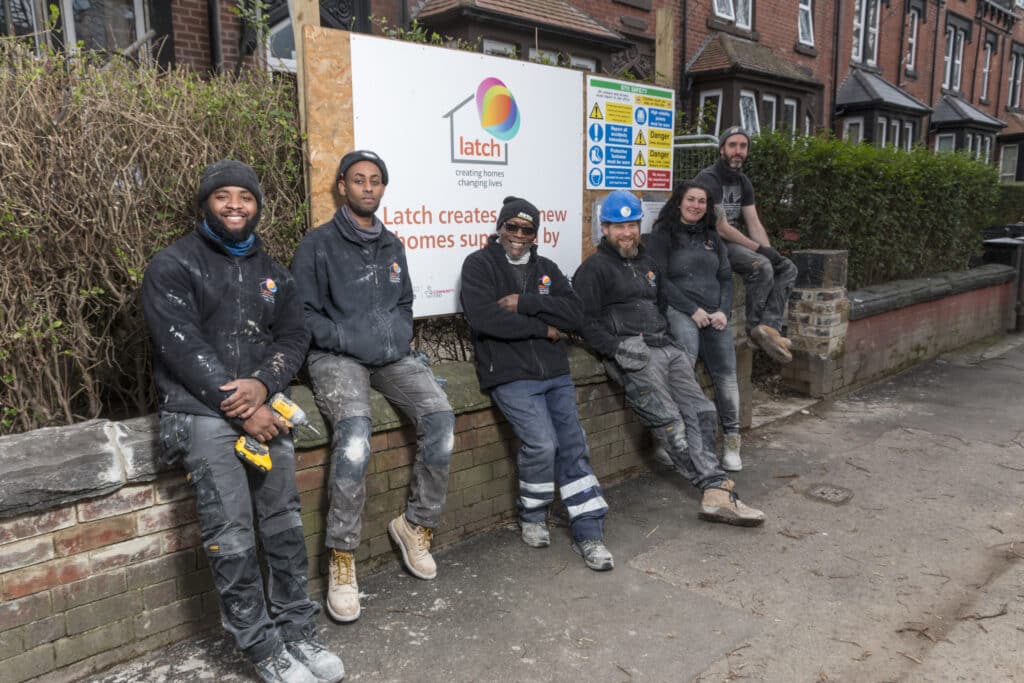
Looking across the portfolio, Jenny shared early patterns: longer, more secure leases are associated with more ambitious projects, and ownership tends to be associated with organisational survival. Her central message was that the pre-development stage – ‘core community technical aid’, business planning, governance and community involvement – is what philanthropy is often least comfortable funding, yet may be most needed:
‘It’s the stuff that philanthropy is probably best placed to fund, but worst at funding, because the impact is indirect and shows up later down the line.’ – Jenny North, Director, The Clothworkers’ Foundation
The Blagrave Trust: going deeper, with young people at the centre
Eli Manderson Evans set out a new strategy, launched the week of the event, which shifts Blagrave from a thinly spread national funder to deep, long-term investment in three places: Portsmouth, London and Birmingham. At its heart are ‘hubs’ – buildings where young people can come together to lead lasting change, with Blagrave committing £10 million in capital funding over 10 years and using it to leverage further investment. The strategy follows a nine-month learning journey led by Stir to Action and through commissioning Ubele to research the gaps and opportunities for young people and minoritised groups.
Eli stressed freehold ownership, democratic governance, mixed income streams, and the time and resource it takes to involve young people meaningfully – and pointed to a distinctive role for philanthropic capital:
‘Philanthropic capital can be really powerful in de-risking projects in the eyes of much bigger institutional investors.’ – Eli Manderson Evans, CEO, The Blagrave Trust
Cross-cutting themes
Several themes surfaced repeatedly across the research and the funder contributions.
- Time is the defining variable. Securing and settling a building routinely takes a decade or more. It can take three years simply to learn how to use a building well. Short funding cycles sit badly with this reality.
- Revenue, not just capital, is the long-term problem. Capital grants get buildings open; covering running costs keeps them alive. There was broad agreement that no single source can carry revenue alone, and that local and national government must have a role.
- Pre-development support is the missing link. Feasibility, business planning, governance and community engagement determine whether a project ever becomes fundable – and these are under-funded.
- A mixed economy is unavoidable. Trusts and foundations are best placed to take risks, innovate and make the case; trading income, community fundraising and, ultimately, public investment all have to play a part.
- Equity matters. Time, capacity and money are less available to organisations led by minoritised and working-class communities, disabled people and others. Networks and connective support help level the field.
- Funders have a voice they tend not to use. There was a clear call for funders to be less self-effacing – to advocate for social value leases, the use of Section 106 and community infrastructure levy funds, and an enabling culture from the public sector.
Next steps and implications
A few clear priorities emerged for where funders could add the most value, both in what they fund and in how they work together.
For trusts and foundations
- Resource the infrastructure that sustains assets over the long term, not just the capital build.
- Create accessible, low-bureaucracy pre-development funding, such as small grants of around £15,000, so organisations can test whether ownership is viable before they commit.
- Align practice between funders: explore a shared application form for capital pots, and reduce conflicting requirements where the same funders keep meeting in the same pipelines.
- Resource funder plus support, meaning expertise, networks and connective tissue alongside grants, and resource the networks that connect leaders to one another.
- Use the funder voice to advocate for social value leases, the release of Section 106 and community infrastructure levy funds, and long-term public revenue support.
For public bodies
- Recognise community-run buildings as low-cost, preventive social infrastructure, and treat asset transfer as an opportunity rather than a disposal of liabilities.
- Build the patient, trusted relationships with community organisations that the research shows are decisive, and consider how levy and developer contributions could support community spaces.
For community organisations
- Invest early in community engagement, a clear use case and the right governance – the foundations that make a building credible and fundable.
- Plan for diverse income, proactive maintenance and leadership succession from the outset, and connect with other community-run buildings to share resources and learning.
‘There are a thousand flowers blooming and we want to support that. There are so many brilliant community asset developers out there doing great stuff.’ – Crispin Truman, Director, The Rayne Foundation