
Youth work in Perthshire had been in decline for years. With limited resources and increasing pressure on services, the question was how – or whether – that trend could be reversed.
In 2019, local foundation The Gannochy Trust and Perth and Kinross Council decided to try something different. They brought their funding together, committed to longer-term support, and gave organisations more room to respond to local need.
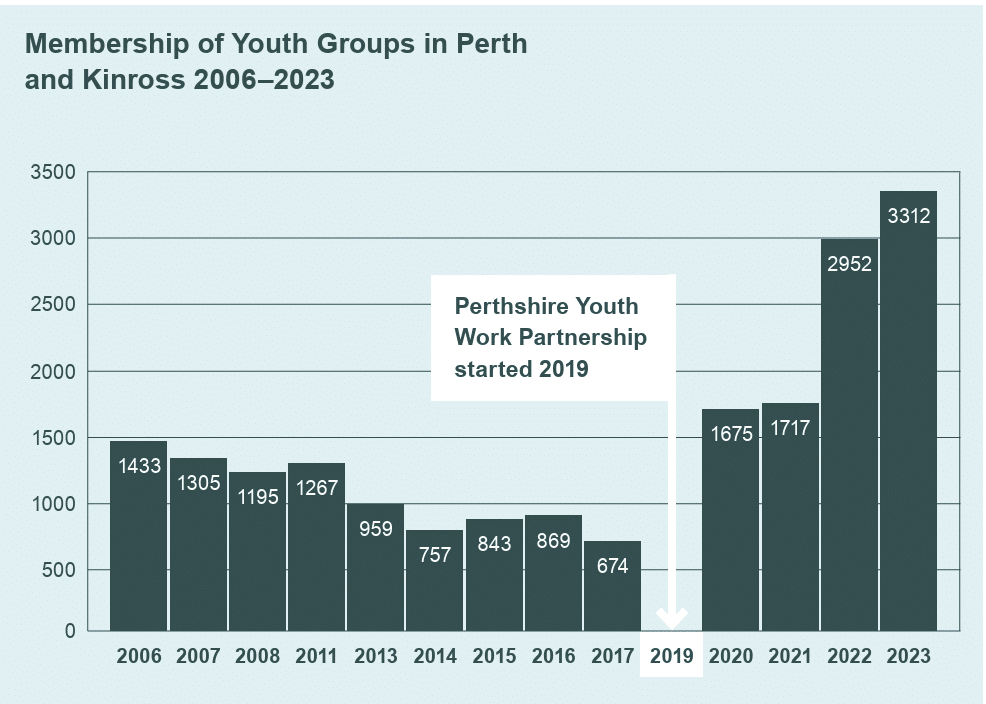
The partnership has exceeded expectations. After a decade of declining participation, this trend has been reversed, with the number of young people taking part in youth work rising steadily since 2019 – all without increasing overall funding.
Fiona Ellis and Sonakshi Anand explore how the partnership was designed, how practical challenges and processes were overcome, and why trust was central to making it work.
Below is a summary of a full report.

Youth work under threat
We were all scrapping for the same funding pots to keep our organisations going.” – A local youth work provider
A mapping study commissioned by Perth-based Housing Foundation The Gannochy Trust in 2017 revealed a dramatic national decline in youth work participation – falling by around 50% between 2006 and 2017 – alongside an acute local decline in Perth and Kinross.

Historically, funding from both the Trust and the council had been short-term, reactive and not aligned to assessed need. This left organisations trapped in a cycle of repeatedly applying for funding, undermining quality, continuity and sustainability, while encouraging competition rather than collaboration.
At the same time, council services were shifting towards more targeted provision, creating widening gaps in universal youth work.
With both funders investing similar amounts – and often supporting the same organisations – there was a clear opportunity to achieve greater impact through a coordinated approach.
Designing a joint approach
The Gannochy Trust and Perth and Kinross Council developed a collaborative funding model grounded in a shared vision to strengthen universal youth work.
By pooling resources into a single fund and committing to five-year funding, they replaced fragmented short-term grants with long-term, stable investment. They also created a single application and reporting process, replacing separate requirements for each funder and reducing the administrative burden on organisations.
The funders contributed on a 50:50 basis, creating a combined fund of approximately £1.5 million over five years. As the council’s systems could not support a jointly held fund, the Trust transferred its funding to the council to enable a single funding pot – a practical solution that required significant trust and flexibility.
Seven local organisations were funded to deliver youth work across five localities, ensuring both urban and rural coverage.
Many were small, grassroots organisations with limited experience of formal tendering, so funders provided support through local roadshows and guidance.
High-trust relationships and individual leadership were critical. As one funding partner reflected:
Shared interest is what made it work… but what defines the partnership is the trust that we have in each other.”
The fund design
Key elements of the fund included:
- Long-term investment: replacing short-term grants with flexible, multi-year funding
- Open and transparent distribution: allocations based on population and deprivation data
- Trust-based approach: autonomy for organisations, with no numerical output targets in contracts
- Co-designed reporting: focused on generating data useful to organisations for learning and improvement, rather than meeting funder requirements
Funded organisations reported feeling “valued and trusted”, with a shift towards more equal partnerships:
They work alongside us rather than above us… as partners in the room.”
Funders also provided support beyond funding, including training, capacity-building and connections into council services.
What changed
The impact of the partnership has been transformational, reversing long-term decline and strengthening the youth work sector.
Increased reach
Participation in youth work has increased sharply since 2019. By 2023/24, organisations were reaching nearly five times as many young people as in 2017/18 – around 42% of the secondary school population in Perthshire.
Stronger organisations
Long-term funding has enabled organisations to move from short-term survival to strategic growth – expanding provision, investing in staff and improving quality.
It gave us the bravery to open a new site and think strategically.”
Improved quality and consistency
Reduced administrative burden has allowed organisations to focus on young people rather than paperwork, while consistent staff and provision have strengthened trust and participation.

Workforce development
The partnership has supported training, apprenticeships and volunteer pathways, with around half of current staff progressing from volunteering roles.
Collaboration
Previously isolated organisations now work together – sharing resources, expertise and funding opportunities, and delivering more joined-up services.
As a partnership we have collective power – we can challenge things we couldn’t individually.”
System-level impact
The partnership has transformed youth work in Perth and Kinross from fragmented provision into a coordinated, strategic system.
Funded organisations now act as strategic partners rather than annual applicants, with a stronger collective voice and greater influence in local decision-making.
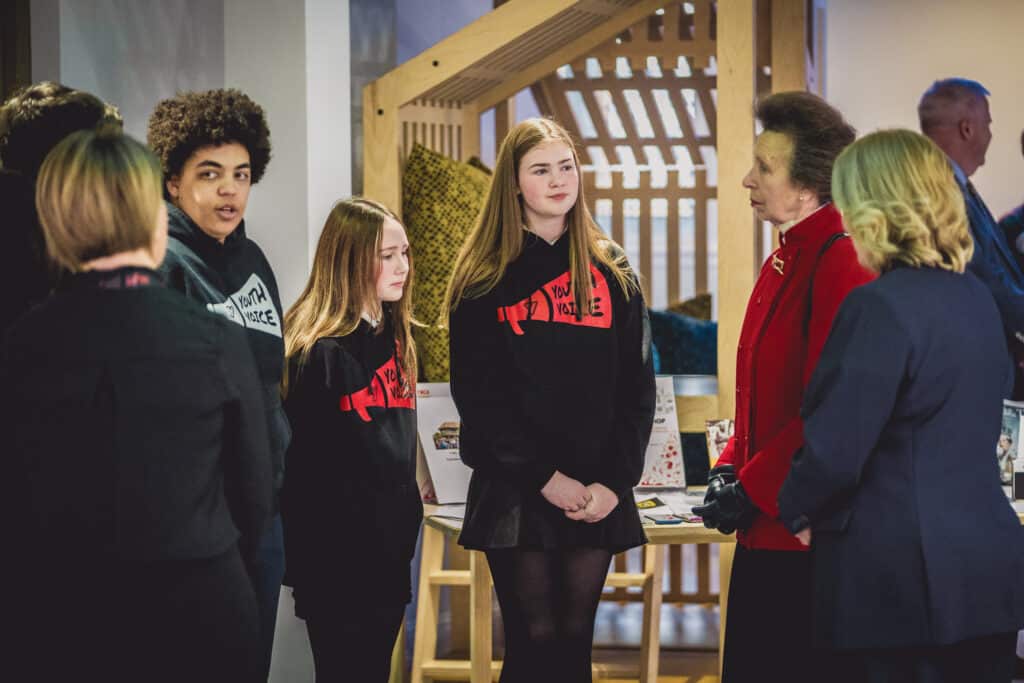
Young people themselves also play a more active role, contributing through Youth Panels and shaping funding decisions.
Learning from the partnership
The Perthshire Youth Work Partnership demonstrates that system-level change can be achieved without increasing overall funding.
What changed was not the level of investment, but the approach – shifting towards long-term, flexible and trust-based funding – underpinned by shared purpose and strong relationships.
“It’s the trust and collaboration that we have enabled… that has made all the difference.”
As financial pressures intensify, this model offers a practical and replicable approach to strengthening local services and improving outcomes for young people.