For years, Postcode Lottery offered flexible funding to large charities – but not to small ones. Community Programmes Manager Katherine Sellar, shares how that changed step by step — and what it means for charities under real pressure to finally have some breathing space.
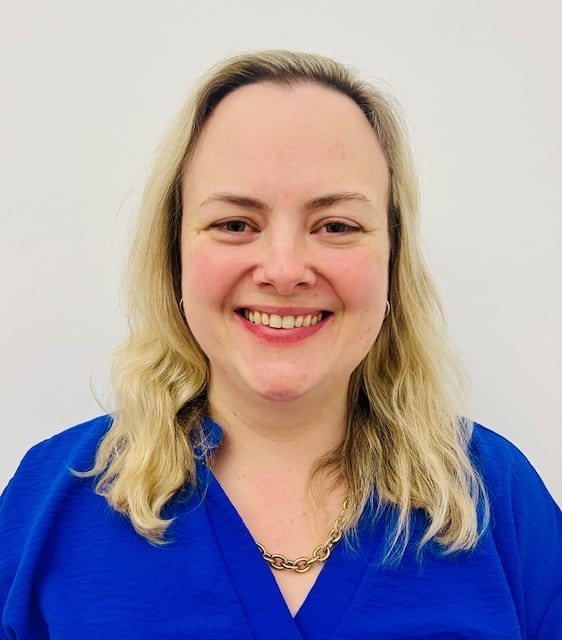
Tell us a bit about Postcode Lottery.
The purpose of Postcode Lottery is to raise money for charities and other good causes. So far, that’s totalled over £1.5 billion thanks to our amazing players.
The funds are distributed through 20 different charitable trusts – not because we like to make things complicated, but because of rules around annual sales limits on charity lotteries. These limits mean that, as the lottery grows, additional trusts have to be set up.
Most of these Trusts give grants to large charities, but six focus on small charities and community groups.
Each Trust has its own board of trustees and its own distinct charitable aims – so we’re operating within quite a lot of restrictions and regulations ourselves, while trying to make the experience for charities as flexible as possible.
How has funding historically worked across the trusts? How flexible have you been?
Postcode Lottery was set up to offer long-term, flexible funding and this has always been the case for the larger charity partners. But for a long time, small charities could only apply for one-year, project-based funding.
About nine years ago we started looking at how we could make the experience more trusting for small charities too.
We didn’t jump straight to multi-year unrestricted funding. Instead, we started by looking at what restrictions we could remove from the project funding.
For example, originally projects had to be new. We changed that so charities could apply for funding for existing work. We also removed limits on how much could be spent on different types of costs – we had restrictions like 50% of the money could be used for this, 25% for that. We removed those percentages and gradually reduced the restrictions. I think that can be a helpful first step for funders who feel very restricted. Sometimes it’s about asking small questions – like if you say only 20% can be spent on overheads, does it actually have to be 20%?
Sometimes it’s about asking small questions – like if you say only 20% can be spent on overheads, does it actually have to be 20%?
How did the shift to unrestricted funding happen?
After reducing restrictions on projects, we introduced the option for charities to apply for core funding. Later we moved away from that language and started using “unrestricted funding”, because “core funding” sometimes confused people and we wanted to make it clear the grants were flexible
What was interesting is that when we offered the choice between unrestricted funding and project funding, most charities still applied for projects. When we spoke to them, they said they were just more used to applying for projects, and they thought we might still favour projects, despite what we were saying.
So we worked hard to communicate clearly: we trust you. We believe you know how best to spend the money. Please apply for unrestricted funding if that’s what you need.
What led you in that direction?
Trusting that charities are the experts in what they do, and offering them long-term, flexible funding is what we believe in at Postcode Lottery, so extending this approach to smaller charities was a natural next step. We also took time to listen to charities and heard repeatedly how important unrestricted funding was.
Quite a lot of the team came from fundraising backgrounds, including me. So we knew how difficult it is for charities – especially small charities – to keep packaging their work into projects just to fit funders’ requirements.
I’d experienced that personally when working at a mental health charity. We ran a telephone counselling service for adult survivors of childhood sexual abuse. The service was working really well and had government funding. But eventually we were told the funding could only continue if the service became “something new”.
So instead of supporting something that was already effective, we had to jump through hoops to redesign it into a completely different format – like a video-based service. There were so many examples like that – of having to invent projects just to secure funding. It felt like a massive waste of time and energy.
How did you move from unrestricted funding to multi-year grants?
So initially our grants were still one-off. Charities had about 12 months to use them, later extended to 18 months.
It was really our involvement with Open and Trusting that prompted the next shift,alongside feedback from charities themselves, results from a small multi-year funding pilot we had done and perspectives from Trustees. I took part in one of IVAR’s accountability sessions, where our funding practices were reviewed by someone from a charity. He was very direct and said: you’re massively limiting the impact by not making these unrestricted grants multi-year. His point was that a one-off unrestricted grant often ends up being used like a project grant. Charities still feel they need to show what specific thing it funded in that year.
That was a key moment for me, because it made clear that by sticking with short-term funding we were inadvertently ending up doing project funding – and that wasn’t what we were intending to do.
We used IVAR’s research on unrestricted funding to back this up and present the argument to the trustees. Being able to reference that evidence, rather than just saying it was a gut feeling, really helped.
What difference have you seen since moving to more flexible funding?
It’s really evident how much stress charities are under. Now that we’ve moved to three-year funding, the emails we get back say things like: “you don’t know how much this means – the breathing space it’s given us”.
When people are under such extreme stress – whether that’s a fundraiser, a volunteer running a tiny community group, or a CEO having to do everything – just having something that reduces that stress feels really important to me.

When people are under such extreme stress – whether that’s a fundraiser, a volunteer running a tiny community group, or a CEO having to do everything – just having something that reduces that stress feels really important to me.
Have there been any challenges in becoming more flexible?
One challenge is that we’re very oversubscribed – in some areas we get ten times more applications than we can fund. That can feel difficult.
By moving to three-year funding, it does mean supporting slightly fewer organisations, but in a more meaningful way.
Another challenge with unrestricted funding is that you’re supporting the organisation as a whole. So we need to be comfortable with everything the charity does.
Like every grant-maker, there are still some things we can’t fund – like the promotion of religion. But rather than abandoning unrestricted funding, we treat those as specific exclusions. The default position is still unrestricted.
What has been most powerful for you personally?
I remember visiting a Citizens Advice that had received a £50,000 unrestricted grant. I met the CEO there, who had worked in the network for over 30 years, and she told me this was the first time she had ever received unrestricted funding.
Hearing that every other bit of funding they received up to that point was restricted – and that it took hours and hours of staff time to manage all those restricted funds – that really stayed with me.
She talked about the relief of being able to use the funding in the way they thought best, which in their case was supporting people at risk of homelessness to stay in their tenancies.
Is there further you want to go in your ‘open and trusting journey’
There’s always more to do!
We’re always reviewing how questions are asked in our application form and trying to make it as streamlined as possible, so we’re not asking anything that’s a waste of time for charities. After every funding round we look at how the questions worked and what we could improve.
We’re also looking at how we can take more information directly from places like the Charity Commission and OSCR websites, rather than asking charities for things that are already publicly available.
And in the future I’d love to build more relationships with the charities we support – getting out to visit them and hearing what they’re thinking. That’s what it’s all about really!

Postcode Lottery is part of Open and Trusting — a community of funders who put trust, respect and flexibility at the heart of grant-making.
A lighter-touch approach to monitoring and evaluation reflects several of the Open and Trusting commitments, living up to principles like being proportionate in reporting, asking relevant questions through open conversations, accepting risk as part of genuine partnership, and communicating with purpose to support learning over compliance.
Video Q&A – Open & Trusting and Us
IVAR also sat down with Katherine to answer snap questions on how Postcode Lottery has approached grant-making over time, insights into adopting a multi-year unrestricted funding process, and the hope she draws from working with charities.